Carry the Glass Together How to Coordinate as a Duo
Two brains, one pane — the invisible skill that keeps the glass intact.
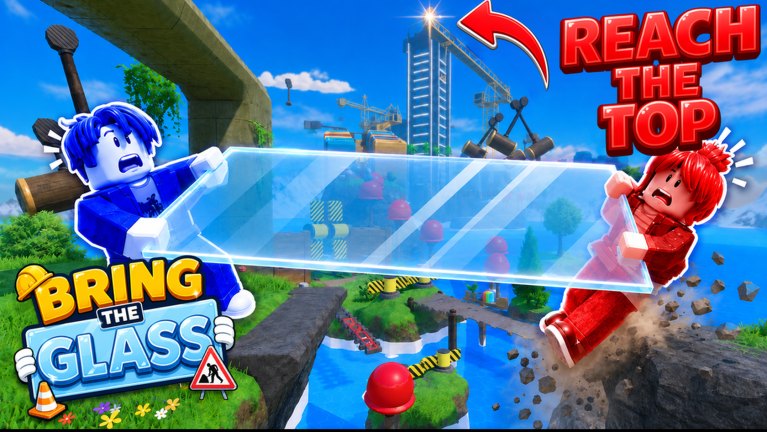
Gear and tier lists matter less than coordination you cannot Google. This page covers how a real duo actually moves: who watches what, when to talk, and why the pane breaks on a gap neither player remembers failing. Pair it with how to protect the glass, the leader guide, and the callout sheet.
A duo that coordinates beats a duo with better reflexes every time.
Why coordination breaks
The pane breaks because two people moved it in opposite directions at the same time. That is almost never malice. It is usually one of four failures:
- No caller — both watching the same hammer, neither calling Wait
- Double talk — leader calls Wait while follower calls Jump
- Camera split — one player tracks a mallet, the other tracks the landing
- Streak tilt — winning duos get confident and stop narrating
The fix for all four is the same: stop, assign roles, use the words.
The coordination loop
Every safe step follows the same three-frame loop:
- Caller sees the next prop — names it, ranks it, calls the action
- Follower mirrors the feet — does not improve on the call, does not jump early
- Both confirm — pane is still intact, next prop is now the caller’s problem
Breaking this loop mid-run is how shatters compound. If the caller stops narrating, the follower should ask Save? and wait for a confirmed Hold before continuing.
Spatial awareness across devices
Console and phone players see the same pane differently. The monitor player sees hammer timing. The TV player sees the landing. The phone player sees the tilt. No single player has the full picture.
The solution: the player with the clearest view of the current hazard calls. The other player follows feet, not instincts. Do not let a phone player call a tight jump from a tilted view. Do not let a TV player lead a mallet cycle without headphones.
Timing versus volume
A loud voice does not fix a late call. The word Wait must reach the follower before their foot leaves the ground. If your partner hears Wait after they are already stepping, the pane is already tilting.
Practice this drill before every session:
- Stand on flat ground, no hazards
- Leader says Wait — follower freezes
- Leader says Walk — follower steps once
- Leader says Jump — follower jumps on the word, not before
- Repeat until the follower does not anticipate
If that drill feels too simple, you have not done it enough. Top duos warm up with this for two minutes before the first hammer.
The stretch trap
Two avatars walking in the same direction looks safe. It is not. When both players walk forward, the pane tilts backward — the glass becomes a lever and the back corner rises. On a narrow beam, that rise puts the pane against the striker.
The fix: walk in a slight crouch, keep arms bent, and call Hold if you feel the pane tilt without a named cause. Stretch recovery is an S-tier fail on the obstacles list. Catch it early.
Desync on water gaps
The first water jump is B-tier on the obstacles list, but it is where most duos shatter for the first time. The reason is desync: one player jumps, the other hesitates, the pane tips sideways into the water.
The count must be verbal and synchronized. Leader says Three-two-one-jump at a steady pace. Follower jumps on jump, not on three. If the follower has a phone, the leader should slow the count by half a beat — phone input lag is real.
Camera discipline
Do not pan your camera during a live cycle. If you are watching a hammer and your follower is watching the landing, the pane is moving two directions at once. The caller sets the camera angle once before entering a hazard zone. The follower matches that angle.
On console, this means the TV player stops looking at the ceiling during a mallet swing. On phone, it means no tilting the device for a better view during a carry. The camera is a coordination tool, not a spectator feature.
After a shatter
Do not talk during the respawn. Use it as a reset breath. When both avatars are back on solid ground, the leader names what went wrong in one sentence: “early jump”, “stretched”, “no call”. Then the leader calls the next action. Dwelling on a shatter during a live run is how the second shatter happens.
If you shatter three times in a row on the same prop, stop and read the obstacle tier list for that prop. The problem is almost never luck. It is usually a missing Wait or a misunderstood rank.
When to break the rules
Experienced duos can deviate: a follower who sees a late hammer can call Hold without the leader’s permission. A phone player who feels a stretch can call Tilt mid-step. These deviations require trust and practice. Do not adopt them on night one.
The emergency callout hierarchy: Hold overrides everything. If either player says Hold, both freeze immediately. No arguments. No questions. Hold first, debrief after.
Frequently Asked Questions
Quick answers for duos who keep shattering the pane.
Why does the pane break even when we are careful?
Careful is not the same as coordinated. Two careful players still shatter if they are watching different hazards. One caller, one camera angle, one pace.
Should we use push-to-talk?
Yes, if you are in a noisy environment. Open mic can pick up keyboard sounds and background noise that delay your callout by a critical half-second.
Our partner rage-quits after shatters. What do we do?
Stop the run. Do the coordination drill on flat ground. If they cannot do the drill without sprinting, the problem is not the game — it is the session mindset.
Is voice required?
Chat-only coordination is possible but slow. A single w means Wait. A single j means jump. Do not write sentences mid-run.